NICE AUTOMATION
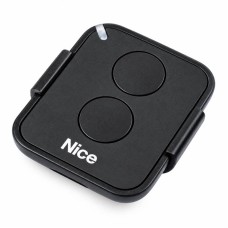
NICE ERA FLOR FLO2RE Gate Remote Control – 2 Channel
NICE FLO2RE 433.92 MHz Rolling Code Remote UAEThe NICE ERA FLOR FLO2RE is a compact 2-channel 433.92..
50.00 AED
Find NICE remote controls and transmitters for gates, garage doors and shutters. Check channels and receiver compatibility before you order, or ask our team to confirm the match.
Compare available models and open a product for its specifications and compatibility details.
NICE FLO2RE 433.92 MHz Rolling Code Remote UAEThe NICE ERA FLOR FLO2RE is a compact 2-channel 433.92..
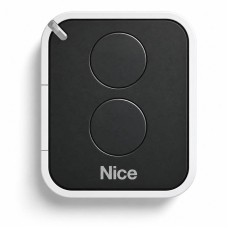
NICE ON2E 433.92 MHz O-Code Gate Remote UAEThe NICE ERA ONE ON2E is a compact professional 2-channel..
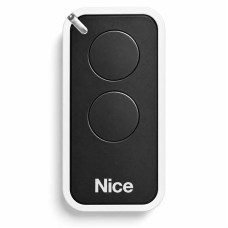
NICE INTI2 433.92 MHz O-Code Gate Remote UAEThe NICE ERA INTI INTI2 is a compact 2-channel 433.92 MH..
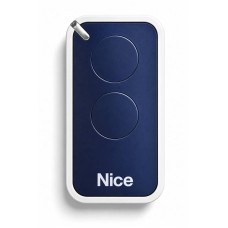
NICE INTI2B Blue 433.92 MHz O-Code Remote UAEThe NICE ERA INTI INTI2B is a compact blue 2-channel 43..
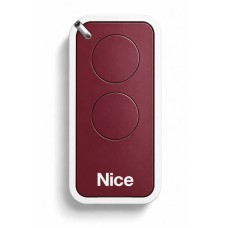
NICE INTI2R Red 433.92 MHz O-Code Remote UAEThe NICE ERA INTI INTI2R is a compact red 2-channel 433...
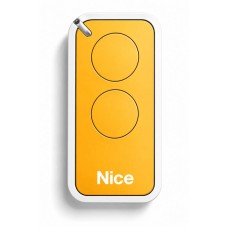
NICE INTI2Y Yellow 433.92 MHz O-Code Remote UAEThe NICE ERA INTI INTI2Y is a compact yellow 2-channe..
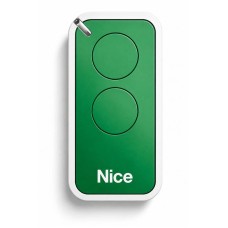
NICE INTI2G Green 433.92 MHz O-Code Remote UAEThe NICE ERA INTI INTI2G is a compact green 2-channel ..
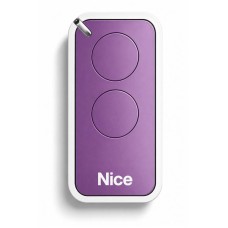
NICE INTI2L Lilac 433.92 MHz O-Code Remote UAEThe NICE ERA INTI INTI2L is a compact lilac 2-channel ..
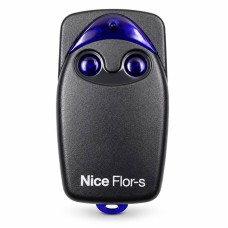
NICE FLO2R-S 433.92 MHz FloR Rolling Code Remote UAEThe NICE FLO2R-S is a classic 2-channel 433.92 M..
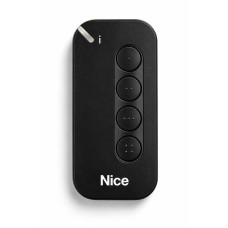
NICE MYGO4 433.92 MHz O-Code Gate Remote UAEThe NICE MYGO4 is a modern 4-channel 433.92 MHz unidirec..
NICE remote controls provide radio operation for compatible sliding gates, swing gates, garage openers and other supported automation systems. Selecting the right transmitter requires matching the existing receiver’s frequency, coding family and enrolment procedure—not simply choosing a remote with the same number of buttons.
Browse genuine NICE transmitter families including ERA ONE, ERA FLOR, INTI and MYGO in two-channel and four-channel configurations, along with model-specific receiver accessories for customers throughout the UAE.
Remote appearance and button count alone do not prove compatibility. Identify the model code on your current transmitter and receiver before purchase.
NICE ERA ONE is a remote-transmitter family for compatible gate and garage automation receivers. The reference range includes the two-channel ON2E and related four-channel ON4E variants. The number of channels determines how many independently programmed commands a transmitter can send; it does not guarantee that every receiver supports every function. The ON2E reference specifies 433.92 MHz and O-Code rolling-code technology, with compatibility dependent on the installed receiver family. Replacing a remote therefore involves matching the exact model and receiver, not simply purchasing another two-button NICE transmitter. Depending on the controller, one button can operate a driveway gate and another a separate approved receiver, or the buttons may be assigned to functions of the same gate. Receiver memory permissions and enrollment procedure should be checked before programming.
The ERA FLOR range includes transmitter references such as FLO2RE and FLO4RE, with different channel counts for controlling compatible automation systems. FLOR-related coding and receiver compatibility need to be checked separately from ERA ONE and other NICE radio technologies even where the outer casing or operating frequency appears similar. A remote can fail to enroll because the receiver uses a different coding family or because programming access is restricted, despite matching the broad 433 MHz frequency band. Customers replacing an older FLO or FLO2R-S transmitter should provide the full model on the back of the handset and, where possible, the receiver model or a clear photo of its label. This prevents unsuitable replacements and unnecessary clearing of programmed remotes.
NICE INTI transmitters are compact, pocket-friendly remotes, widely seen in two-channel versions such as INTI2 and colour-coded variants INTI2B, INTI2R, INTI2Y, INTI2G and INTI2L. The colour makes it easier to distinguish several household or business transmitters, but colour does not establish electrical or radio compatibility. Verify the INTI model, receiver frequency and supported encoding technology before purchase. The two channels can be assigned according to the capability of an approved receiver and its programming mode. When adding several users at a compound entrance, check the receiver’s memory capacity and the procedure for deleting lost transmitters. Remotes should be enrolled with permission from the system administrator rather than resetting the entire receiver.
The MYGO family includes multichannel NICE transmitters such as MYGO4, which is listed with four channels in the reference catalogue. Extra channels are useful where a property has several compatible access points, for example a sliding gate, garage door and another automation command, provided each target receiver supports enrollment of that transmitter family. A four-button transmitter is not automatically interchangeable with an older four-button handset: the frequency, radio coding and receiver generation must match. For an existing NICE installation, identify whether the receiver is an integrated plug-in unit or an external module and confirm the required registration process. Where the correct receiver is not compatible, a separately approved receiver solution may be necessary rather than changing the remote alone.
Check the model number on the existing transmitter, its frequency marking, and the radio receiver or control board fitted to the motor. Determine whether the system uses a supported coding protocol and whether new remotes can be enrolled with the available receiver access.
For residential compounds and businesses, consider how many remotes will be required, how lost remotes are disabled, and whether multiple entrance commands are needed. If uncertain, send photographs of both sides of the existing remote and the receiver part number.
Ask for Technical GuidanceRelated NICE radio accessories may include plug-in or external receivers, compatible antennas, control board radio modules and suitable batteries. Programming steps vary and may require access to the receiver; avoid clearing an existing receiver’s memory without authorisation because this can disable other working transmitters.
Compare NICE remote transmitters for gate and garage automation across the UAE, including Dubai, Sharjah, Abu Dhabi, Ajman and other Emirates. Share the existing remote code or receiver details when requesting assistance with replacement and compatibility.
Remote controls communicate with a matching receiver rather than directly with the gate motor mechanism. NICE transmitter families may differ in frequency, coding, enrolment method and the number of available channels. A remote that looks identical to an existing unit may not operate the receiver if those technical details differ.
Before replacing or adding a transmitter, note the exact remote model printed on the housing, the receiver model or control board part number, and the system frequency. If an older product has been discontinued, find a manufacturer-confirmed replacement rather than relying on a visual resemblance.
The ERA ONE and ERA FLOR names cover familiar NICE radio product families; INTI and MYGO transmitters appear in other form factors and generations. Individual variants can have different button counts, protocols and receiver compatibility.
Some systems allow adding more than one transmitter through receiver programming. Others have limits on stored codes or require service-level access. Check the actual control receiver before assuming a programming sequence will work.
A channel is a separately programmable command, not necessarily a different gate. Depending on receiver configuration, channels could control full opening, pedestrian access, a second entrance or another supported automation function.
A four-channel remote offers more potential commands, but the receiver, controller configuration and site wiring determine what those buttons can actually operate. Extra channels do not automatically enable unsupported functions.
Enrollment methods vary. Some receivers need a physical learning button, approved service tools or an authorised existing remote; others can use a specified procedure for adding compatible transmitters. Programming should be done only by someone authorised to control the entrance.
Avoid indiscriminately erasing receiver memory because that can invalidate all existing authorised remotes. At a residential compound or commercial site, agree on how lost remotes are revoked and new transmitters issued.
Practical operating distance depends on the transmitter battery, radio interference, receiver antenna location, nearby metalwork and building structure. Reduced range does not automatically indicate that a motor is defective.
Replace batteries with the correct type, check for physical remote damage and inspect the receiver antenna and enclosure before reprogramming. If only one transmitter fails while others work, identify that transmitter and test it separately.
Send clear photographs of the front and back of the current remote, including any model number or radio-frequency marking. If available, include the receiver or motor label. A precise match reduces the risk of ordering an incompatible transmitter.
When choosing additional remotes for families or staff, consider required channel count, handling of lost units and whether the receiver can accommodate the number of authorised users.
No. Matching the brand alone is insufficient; radio frequency, receiver family and coding system must be compatible.
Two-channel and four-channel transmitters offer different numbers of programmable functions. The receiver and installation determine how those channels can be used.
Some systems permit authorised remote-to-remote enrolment; others require access to the receiver or programming equipment.
A photograph of both sides of the existing transmitter and the receiver or motor model if available.
No. The radio system and receiver compatibility must match; some systems use protected or rolling-code protocols.
Possible causes include an incompatible protocol, an incorrect receiver procedure, insufficient receiver capacity or a battery issue.
No. Each button requires a compatible receiver command and appropriate site configuration.